
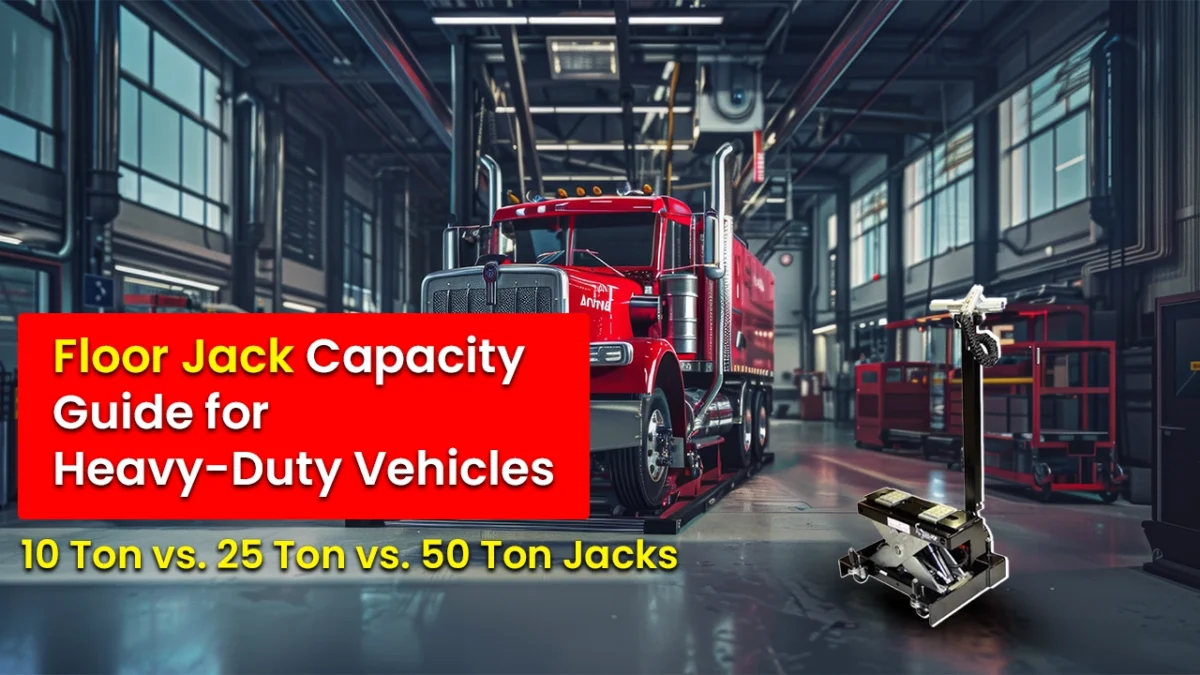
When you’re dealing with heavy-duty vehicles, choosing the right floor jack isn’t something you want to guess. A jack that’s too small struggles. One that’s too big might not be practical for your setup.
And most of the time, the confusion comes down to capacity – 10 ton, 25 ton, 50 ton… what actually makes sense?
The answer isn’t just about numbers. It depends on the type of vehicles you handle, how often you’re using the jack, and the kind of work you’re doing.
What Does “Ton Capacity” Really Mean?
The ton rating tells you how much weight the jack can safely lift.
But here’s where people get it wrong – you’re not lifting the entire vehicle. You’re usually lifting one end or one axle. Still, that weight can be sign2ificant, especially with trucks and commercial vehicles.
A safer approach is to choose a jack with more capacity than you think you need, so it’s not constantly working at its limit.
10 Ton Floor Jacks – Where They Fit
A 10 ton jack is usually the starting point for heavier vehicles.
Works well for:
- Light trucks
- Vans
- Smaller commercial vehicles
What to expect:
- Easier to move around
- More compact compared to higher-capacity jacks
- Good for occasional heavy-duty work
If your workshop mostly handles lighter commercial vehicles, this is often enough.
25 Ton Floor Jacks – The Middle Ground
This is where things get more serious.
A 25 ton jack is built for regular use in workshops that deal with heavier vehicles more often.
Works well for:
- Medium-duty trucks
- Fleet vehicles
- Mixed workshop environments
What to expect:
- Stronger build and stability
- Better performance under frequent use
- Less strain during lifting
This is usually the safest choice for workshops that don’t want to be limited.
50 Ton Floor Jacks – For Heavy-Duty Work
Once you’re working with large commercial vehicles, a 50 ton jack starts to make sense.
Works well for:
- Heavy trucks
- Buses
- Industrial vehicles
What to expect:
- Maximum lifting power
- Built for demanding conditions
- Not as portable due to size and weight
This is less about convenience and more about capability.
Quick Comparison
| Capacity | Best For | Usage Level | Portability |
|---|---|---|---|
| 10 Ton | Light trucks | Occasional | Easy |
| 25 Ton | Medium trucks & fleets | Regular | Moderate |
| 50 Ton | Heavy commercial vehicles | Heavy-duty | Limited |
How to Choose the Right Capacity
Instead of overthinking it, focus on a few practical points:
1. What vehicles do you actually handle?
If most of your work is light trucks, you don’t need 50 ton capacity. But if heavier vehicles come in regularly, going higher makes sense.
2. How often will you use it?
For occasional use, a lower-capacity jack can work. For daily use, it’s better to choose something stronger and more durable.
3. Think beyond the minimum
Don’t pick a jack that’s just enough. A little extra capacity improves safety and reduces wear over time.
4. Consider your workspace
Higher-capacity jacks are bigger and heavier. Make sure your workspace can handle that.
Common Mistakes to Avoid
- Choosing based only on price
- Picking the minimum required capacity
- Ignoring size and maneuverability
- Not thinking about long-term use
Most of these common mistakes only become obvious after you’ve already bought the wrong jack.
Where Floor Jacks Fit with Other Equipment
In many workshops, a floor jack is just one part of the setup.
For example:
- A truck jack might be used for specific heavy lifting tasks
- Pit jacks or lifts handle other types of work
It’s less about one tool doing everything and more about having the right combination.
Final Thoughts
Choosing between a 10 ton, 25 ton, and 50 ton floor jack comes down to what you’re actually working on day to day. There’s no one-size-fits-all answer.
If you’re unsure, it’s usually better to go slightly higher in capacity than you need. It gives you more flexibility and keeps things safer in the long run.
And when you’re investing in equipment that handles serious weight, going with a trusted manufacturer like Stan Design helps ensure you’re getting something built for real-world use – not just specs on paper.
Frequently Asked Questions (FAQs)
1. Do I really need a 50 ton jack, or is that overkill?
For most setups, it is overkill. Unless you’re regularly working on heavy trucks or buses, you probably won’t use that capacity fully. A lot of workshops are fine with 25 ton.
2. Is a 10 ton jack enough for trucks?
For lighter trucks, yes. But once the vehicles get bigger or heavier, it starts feeling like you’re pushing the limit. That’s where people usually upgrade.
3. Why not just go for the highest capacity and be done with it?
You could, but bigger jacks are heavier, harder to move, and not always practical for everyday work. It’s better to match it to what you actually use.
4. How much capacity should I aim above my vehicle weight?
You don’t need an exact number, but it’s always safer to go a bit higher than what you think you need. It keeps the jack from working at its limit all the time.
5. Can one floor jack handle all types of vehicles?
Not really. It might work for some, but not everything. That’s why many workshops end up using more than one type, depending on the job.
6. What’s the most common mistake when choosing a floor jack?
Going for the minimum capacity just to save money. It usually works at first, but over time, it becomes a limitation.
7. Does a higher capacity jack last longer?
Generally, yes – because it’s not under as much stress during use. But build quality matters just as much as capacity.
8. Where does a truck jack fit into all this?
A truck jack is often used alongside floor jacks for heavier or more specific lifting tasks. It’s not about replacing one with the other – they usually work together.