
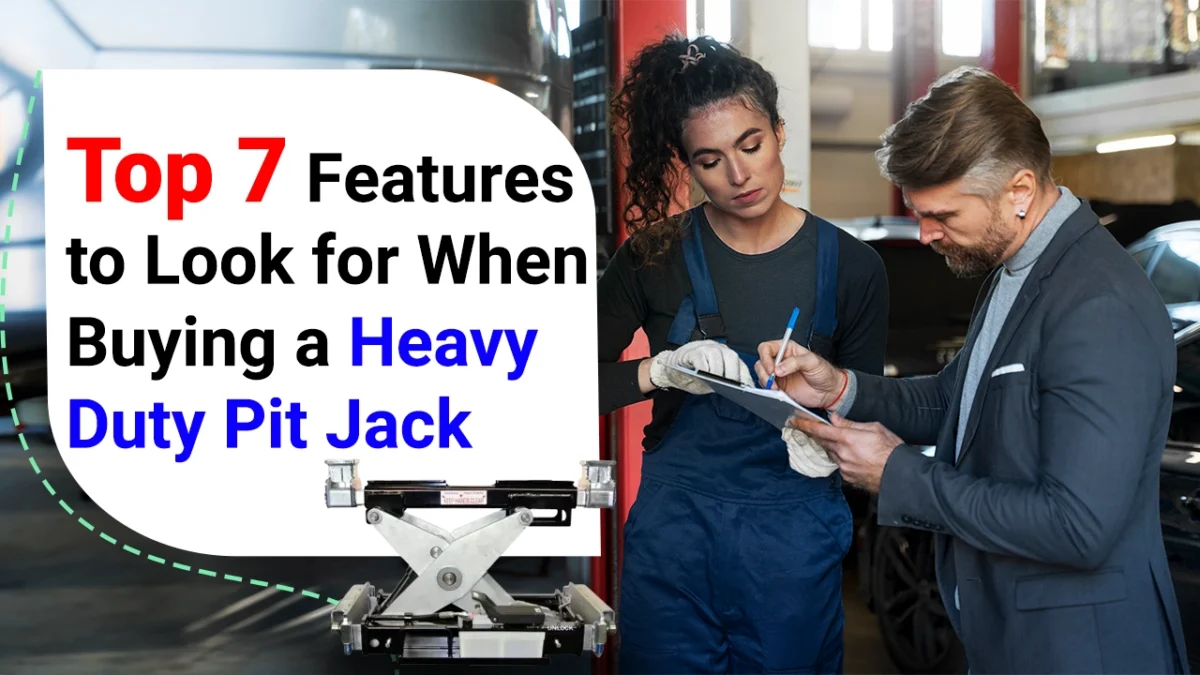
Buying a heavy-duty pit jack isn’t something most workshops do very often. That’s why getting it right the first time matters.
On the surface, many pit jacks seem pretty similar. They lift vehicles, fit into a service pit, and help technicians access wheels, brakes, suspension components, and axles. But once they’re being used every day, the differences become a lot more noticeable.
Some pit jacks hold up well for years. Others end up creating frustration because they don’t fit the workflow as well as expected.
If you’re comparing options, here are seven features worth looking at before making a decision.
1. Lifting Capacity
This is usually where most people start.
The pit jack should be capable of handling the vehicles that come through the shop on a regular basis. That could include:
- Commercial trucks
- Fleet vehicles
- Buses
- Utility vehicles
A truck jack that is constantly working near its maximum rating tends to have a harder life than one that has some capacity to spare.
The goal is to match the jack to the workload rather than simply choosing the highest number available.
2. Lifting Range
Capacity gets most of the attention, but lifting range is just as important.
After all, the jack still needs to raise the vehicle high enough to perform the work comfortably.
A good lifting range makes tasks like:
- Wheel removal
- Brake service
- Suspension repairs
- Axle work
much easier to carry out.
It’s one of those things people rarely think about until they realize they don’t have enough lift.
3. Smooth Lifting and Lowering
Nobody enjoys fighting with equipment during a busy day.
A pit jack should operate smoothly and predictably, whether it’s raising a vehicle or bringing it back down.
When lifting feels controlled, technicians can focus on the repair instead of the equipment.
Over time, smooth operation tends to become one of those features that people appreciate more than they expected.
4. Solid Build Quality
Heavy-duty equipment gets put to work.
That’s why construction quality matters.
A well-built pit jack should feel sturdy and capable of handling daily use without constantly needing attention.
Things people often look at include:
- Frame construction
- Weld quality
- Hydraulic components
- Overall stability
Those details may not be exciting, but they usually tell you a lot about how the equipment will perform over the years.
5. Compatibility with Your Pit Setup
This is one of the easiest things to overlook.
Not every pit jack works with every service pit.
Before making a purchase, it’s worth checking:
- Pit dimensions
- Rail systems
- Available clearance
- Installation requirements
A little planning here can prevent a lot of frustration later.
6. Easy Positioning
A pit jack may have excellent specifications, but if it’s difficult to move where it needs to go, technicians will notice pretty quickly.
Good maneuverability can save time throughout the day.
Features that help include:
- Smooth-rolling wheels
- Balanced construction
- Easy adjustment points
It might sound like a small thing, but it makes a difference when the equipment is used constantly.
7. Reliability Over the Long Run
Most buyers look at the purchase price.
Most workshop owners care about what happens after the purchase.
A reliable pit jack can help reduce:
- Downtime
- Unexpected repairs
- Service interruptions
When equipment is used every day, reliability tends to become one of the most valuable features of all.
Why These Features Matter
A heavy-duty pit jack isn’t a tool that sits in the corner waiting to be used once in a while.
In many shops, it’s part of the daily workflow.
That’s why practical things like:
- Lift range
- Stability
- Ease of use
- Reliability
often end up being just as important as lifting capacity.
One Common Buying Mistake
A lot of people compare pit jacks based almost entirely on lifting capacity.
While that’s important, it doesn’t tell the whole story.
A jack that’s easy to position, works smoothly, and fits the service pit properly often delivers more value than one that simply has the highest capacity rating.
Final Thoughts
Choosing a heavy-duty pit jack is about more than comparing specifications on a brochure. The right equipment should fit the vehicles being serviced, work well with the existing pit setup, and make everyday tasks easier for technicians.
By paying attention to capacity, lift range, build quality, compatibility, and long-term reliability, workshops can make a decision they’ll be happy with for years. And when dependable lifting equipment is a priority, many service facilities turn to trusted manufacturers like Stan Design for pit jack solutions designed to handle real-world workshop demands.
Frequently Asked Questions (FAQs)
1. How do I know what capacity pit jack I need?
A good rule is to look at the heaviest vehicles your shop services regularly and choose a jack that can comfortably handle that workload.
2. Is lifting capacity the most important feature?
It’s important, but it’s not the only thing that matters. Lift range, stability, and ease of use can be just as important in day-to-day operation.
3. Why should I care about lifting range?
Because a jack can have plenty of capacity and still not lift the vehicle high enough for the work you’re trying to do.
4. Do all pit jacks fit every service pit?
No. Pit dimensions, rail systems, and installation requirements can vary, so compatibility should always be checked first.
5. What makes a pit jack easier to use?
Smooth operation, easy positioning, and reliable controls usually make the biggest difference during a busy workday.
6. How important is build quality in a pit jack?
Very important. Heavy-duty equipment sees a lot of use, so strong construction can help it hold up better over time.
7. Is it worth paying more for a higher-quality pit jack?
For many workshops, yes. Better-built equipment often means fewer issues and less downtime in the long run.
8. What’s a common mistake people make when buying a pit jack?
Many buyers focus only on lifting capacity and forget to consider things like compatibility, lift range, and everyday usability.