
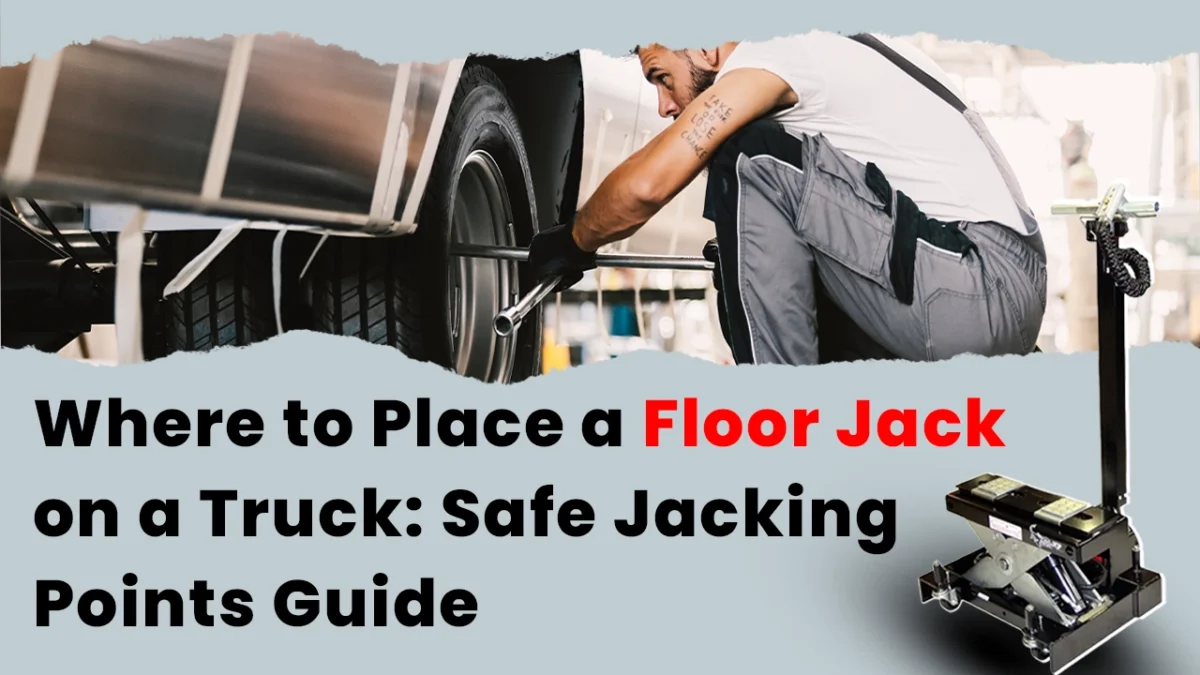
Anyone that owns a truck knows that working on the truck requires more than just having a good set of tools to get the job done; it also requires you to use those tools safely and effectively. One of the biggest risks when working on your truck is placing the floor jack in the wrong location.
There are many ways to injury the truck frame, severely bend critical suspension and steering components, or build a rickety lift by placing the jack in the wrong location. In this presentation, we will discuss jack placement for this type of repair.
Why Jack Placement Matters More Than You Think
When choosing to use a floor jack to lift an object, never forget the lifting points. The floor jack will only lift to the quality of the lifting points you choose to use.
Incorrect placement can:
- Damage the truck’s underbody or suspension
- Cause the vehicle to slip or tilt
- Put your safety at serious risk
Trucks are bigger and heavier than cars so it’s unwise to guess where to attach the lift point.
The Safest Jacking Points on a Truck
Since every truck model has its own distinct features and weight limits, these can vary between models when it comes to capabilities like weight lifting. Be sure to check your truck owner’s manual for specific details.
1. Front Axle
When lifting your truck it’s generally best to add lift to the point on the front axle beam.
- Designed to support weight
- Provides balanced lifting
- Ideal for tire or suspension work
2. Rear Axle
Lift rear with jack under rear axle housing (differential area).
- Strong and stable
- Supports heavy loads easily
- Commonly used for rear tire maintenance
3. Frame Rails
Another place to possibly mount lights on your truck would be on the frame rails. These are the long bars that run underneath the truck bed out to the wheels on each side.
- Best for lifting one side of the truck
- Make sure you choose a reinforced section
- Avoid thin or rusted areas
4. Manufacturer-Recommended Lift Points
There are many different lifting points on various trucks.
Always check:
- Owner’s manual
- Service guide
For exact dates please refer to the official calendar.
Where You Should NEVER Place a Floor Jack
Lifting is not just about knowing where to apply the force, it’s also equally important to know where not to.
Avoid placing the jack under:
- Fuel tank
- Engine oil pan
- Transmission housing
- Suspension arms(unless specified)
- Thin sheet metal
These areas are not rated for weight and can be damaged.
Step-by-Step: How to Safely Jack Up a Truck
Here’s a simple process you can follow:
- Park on a flat, solid surface
- Engage the parking brake
- Use wheel chocks to prevent movement
- Raise the vehicle using a floor jack. Make sure the jack is safely secured under the car.
- Lift slowly and steadily
- Place jack stands before working underneath
Remember to never support your truck with a jack alone.
Choosing the Right Floor Jack for Trucks
Not all floor jacks are created equal when it comes to lifting trucks – you need to make sure the jack can safely handle the weight of your rig, and also that it will raise high enough so you can get underneath for repairs.
Look for:
- Ability to increase tonnage for taller builds (at least 3–6 ton for most trucks).
- Wide base for stability
- Durable construction for repeated use
For your safety and ease of repair, consider using a good quality truck jack or heavy-duty floor jack.
Common Mistakes to Avoid
These mistakes are typically made by experienced users of Quicksheet, but are easily preventable with a few simple precautions.
- Using the wrong lift point
- Lifting on uneven ground
- Not using jack stands
- Overloading the jack
- Rushing the process
“Always complete job to highest standard. Cost of repairs to damages caused by poor quality work far greater than doing it correctly in the first place.”
Final Thoughts
Using a floor jack to lift up a truck for repairs is pretty common, but there are some important considerations about where to place the jack when doing so. Safe usage of a floor jack on a truck can help protect your truck, your other equipment, and most importantly, you.
Always lift properly, use the correct lift points, lift tools and never take shortcuts.
Whether it be for changing oils and tires, or simply lifting heavy components into place, Stan Design holds a variety of lifting equipment suitable for truck maintenance.