
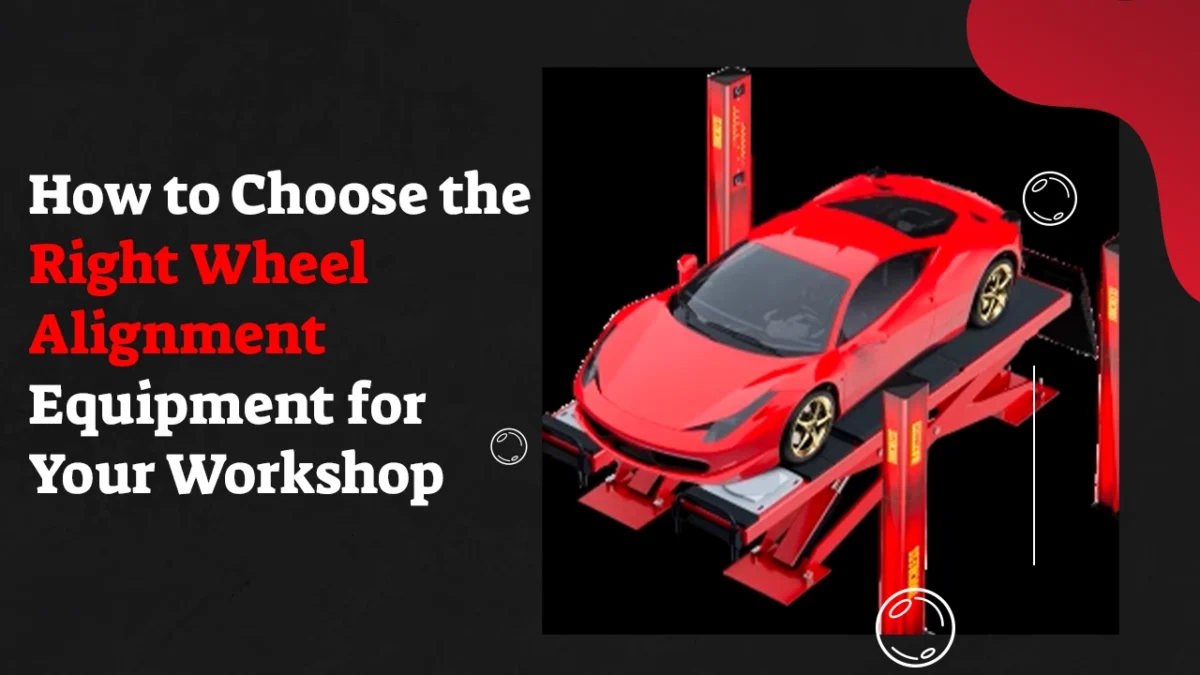
Selecting the correct wheel alignment equipment is a revenue decision. With 20 years of experience working directly with top manufacturers of automotive alignment equipment, as well as working behind the counter on the inner workings and operations of shops, RTA has first-hand knowledge of how the correct wheel alignment machine can increase revenue for repair shops by creating a more efficient and accurate shop that produces satisfied customers.
You have invested in a spray paint booth. Now you have to decide on a paint system to go into that booth. There are many choices. 3D Systems, CCD Machines or perhaps a portable system? We can help you decide.
This tutorial explains the rules in an easy to understand fashion.
1. Understand Your Workshop Needs First
Before you even compare machines, ask yourself:
Our EV services include battery testing and replacement for cars, SUV’s and trucks. We also repair EV’s of all makes and models.
- What is your daily alignment volume?
- Do you offer premium services like performance alignment?
- Do you need a truck jack for these heavy duty vehicles?
Why this matters:
Small garages are not big tire shops. That means you can’t afford to spend too much time, money and effort on too many processes and features that don’t bring enough return on investment. On the flip side, you can’t afford to spend too little on the tools, processes and people that could increase your sales.
2. Choose the Right Type of Alignment Technology
3D Wheel Alignment Systems
- Uses cameras and targets
Fast, highly accurate - Ideal for high-volume workshops
- It can also be used with truck jacks for alignment of heavier vehicles such as trucks.
CCD Alignment Machines
- Uses sensors attached to wheels
- More affordable
Good for mid-sized workshops - These jacks can be supplied to adapt to most standard lifting systems or truck jack-assisted.
Laser Alignment Systems
- Older technology
- Lower cost but less precise
- Limited use for modern workshops handling trucks
Expert Tip:
If you are looking to scale, consider 3D alignment systems which significantly reduce time to alignment and increase consistency.
3. Accuracy & Calibration Capabilities
Accuracy is everything in alignment.
Look for:
- Real-time measurement updates
- Automatic compensation
- Easy calibration process
Does your truck lift ram measurement system accurately measure to both truck jacks and heavy-duty lifting systems?
An automated washer/filler that needs constant recalibration can be costing your business in terms of lost efficiency and machine downtime.
4. Compatibility with Your Existing Setup
Your alignment equipment must work seamlessly with:
- 4-post lifts
- Scissor lifts
- Alignment racks
- Truck jacks for lifting heavy-duty vehicles
Common mistake:
Not checking compatibility with Lift and Truck Jack setup before purchasing Alignment Equipment.
5. Software & User Interface
Modern alignment systems are software-driven.
Look for:
- Easy-to-use interface
- Regular software updates
- New & Used Car,
- Motorcycle, Truck, Bus & Van Models Including
- Hybrid & Electric Vehicles
- Guided alignment steps
Easy to use. Easy to set up and simple to operate. Reduced training time and error. Simple to switch between standard and truck jack-supported positions.
6. Space Requirements & Workshop Layout
Not all workshops have unlimited space.
Consider:
- Camera tower placement
- Vehicle entry/exit space
- Sensor storage
- Sufficient space must be available to place the truck jack and for access by the operators to service the tube.
Pro Insight:
Our small systems are ideally suited for a compact urban garage. Our larger systems are more suitable for higher capacity workshops that service trucks.
7. Build Quality & Durability
Alignment equipment is a long-term investment.
Check:
- Frame strength
- Sensor durability
- Resistance to dust and shop conditions
For very heavy duty usage (e.g. Truck servicing), equipment should be rated for higher usage, and for regular heavy loading.
Low cost equipment may initially save you money when you buy it, but can wind up costing you much more in repairs and down time over the long run.
8. After-Sales Support & Training
This is where many workshops fail.
Always check:
- Installation support
- Staff training
- Technical support availability
- Spare parts access
Training is required for using the alignment system in conjunction with truck jacks and heavy vehicles.
9. ROI & Pricing Consideration
We don’t just look at the cost and offer the cheapest option. We assess return on investment and look at the overall picture to ensure that you receive the best value from our packages.
Ask:
- How many alignments per day to break even?
- Will this machine reduce service time?
Yes. Commercial trucks are heavy and have oversized tires which means that special considerations must be taken to operate them correctly. If a commercial truck is not properly aligned then it could cause abnormal wear, decreased fuel efficiency, and potentially damage the vehicle.
A quality truck alignment machine can pay for itself through increased efficiency and accuracy by allowing you to offer truck alignment services using truck jacks.
10. Future-Proofing Your Investment
The automotive industry has taken to changing at a pace that is unprecedented. The industry has been transitioning from traditional gasoline powered engines to more environmentally friendly Electric Vehicles (EVs) and vehicles equipped with various Advanced Driver-Assistance Systems (ADAS). The enhanced complexity of these newer vehicles creates new challenges when it comes to safely retrieving data from
Make sure your equipment:
- Supports modern vehicles and trucks
- Can be upgraded
Integrates with future technologies
Popular Wheel Alignment Equipment Models to Consider
Have you looked at systems used in other areas such as manufacturing and thought how they could be adapted to a workshop.
Some commonly used options include:
Though this Aligner is mainly intended for mass production of Large Vehicles, it can also be used for a Vehicle Workshop that produces Standard Passenger Vehicles on a production line.
- Aligner GA800-B High Accuracy Digital Indenter for Rock Hardness. For Medium to Large Workshops with Heavy Production.
- Aligner GA800-C – even more precise, even more flexible to adapt to a variety of vehicles and ideal for large production volume shops.
- Aligner GA800 PRO-A / PRO-B High volume production models for large volume production in workshops and dealerships. Fast, automated and accurate.
Expert Insight:
If you also service trucks in your shop, consider pairing an advanced alignment system with a truck jack or heavy-duty lift.
Final Thoughts
It’s easy to be blinded by the latest and greatest (highest priced) wheel alignment machine on the market. At Stan Design we have designed a wide variety of Alignment machines over the years to suit the needs of many different sized shops and budgets. Whether you’re looking for the ultimate in performance, durability and long-term value for a passenger alignment, heavy-duty truck alignment or light-truck alignment, we have the perfect machine for you.
A well-chosen system will:
Improve service quality
Increase workshop efficiency
Boost long-term profitability
Quick Summary Checklist
Before buying, make sure your alignment equipment:
✔ Matches your workshop size and volume
✔ Uses modern technology (preferably 3D)
✔ Can be modified to fit most setups and truck jacks.
✔ Has reliable software and support
✔ Offers strong ROI potential