
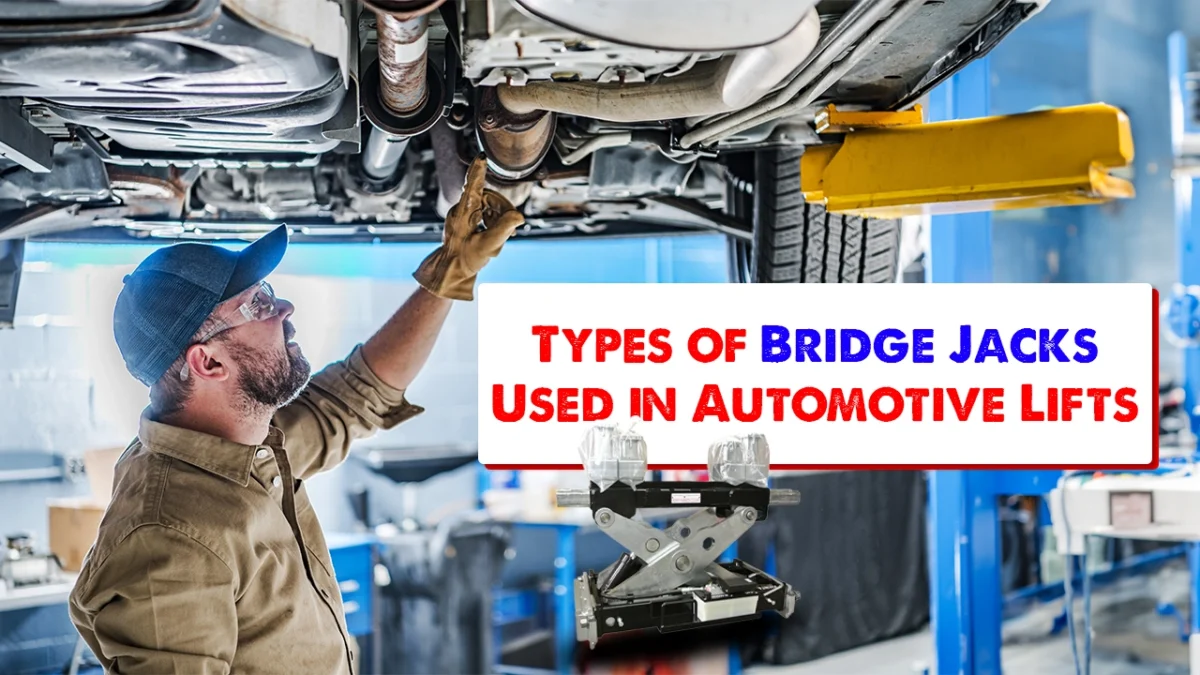
If you’ve worked around four-post lifts for any amount of time, you already know a bridge jack changes what the lift can actually do. Without one, the vehicle stays sitting on its wheels. Once a bridge jack is added, you can lift the axle or frame and start doing wheel, brake, suspension, and tire work properly.
The thing is, not all bridge jacks are the same. Different workshops use different setups depending on the kind of vehicles they handle and how heavy the daily workload is.
Some are built for lighter automotive jobs, while others are designed for trucks, buses, and commercial vehicles where the weight is on a completely different level.
What Is a Bridge Jack?
A bridge jack sits between the runways of a four-post lift and raises part of the vehicle off the lift surface.
Instead of lifting the entire vehicle like a standard lift does, it focuses on lifting one section – usually the wheels or axle area.
That’s what makes wheel and suspension work possible on a four-post setup.
Common Types of Bridge Jacks
1. Air Hydraulic Bridge Jacks
These are probably the most common in busy workshops.
They use compressed air along with hydraulic lifting power, so the operation feels quicker and smoother compared to fully manual systems.
Why people like them:
- Faster lifting
- Less physical effort
- Better for high-volume shops
They’re especially common in places where vehicles are moving through constantly during the day.
2. Manual Hydraulic Bridge Jacks
This is the more traditional setup.
Instead of air power, the lifting is done manually using hydraulic force. They’re simpler overall and usually cost less upfront.
Where they make sense:
- Smaller garages
- Lower daily usage
- Shops not relying on compressed air systems
They still work perfectly fine – it just takes a little more effort.
3. Rolling Bridge Jacks
These are designed to move smoothly along the lift rails so positioning becomes easier.
Instead of struggling to line things up manually every time, the jack rolls into place where it’s needed.
What stands out:
- Better flexibility
- Faster positioning
- Easier workflow
In busy shops, that convenience matters more than people think.
4. Fixed Bridge Jacks
Unlike rolling versions, fixed bridge jacks stay in one position.
They’re more common in setups where the lift is dedicated to a specific type of work and constant repositioning isn’t necessary.
Usually found in:
- Dedicated service bays
- Consistent workflow setups
- Specialized repair areas
Simple setup, less movement.
5. Heavy-Duty Bridge Jacks
This is where things move into commercial territory.
Heavy-duty bridge jacks are built for:
- Trucks
- Buses
- Fleet vehicles
- Industrial equipment
The lifting capacity is much higher, and in some workshops they’re also used alongside a truck jack setup for additional lifting support.
What matters most here:
- Stability
- Load capacity
- Durability under constant use
These aren’t light-use systems.
6. Pneumatic Bridge Jacks
People sometimes confuse these with air hydraulic systems, but pneumatic bridge jacks rely mainly on air pressure for lifting.
They’re generally:
- Quick to operate
- Simple in design
- Good for lighter lifting tasks
Not every shop uses them, but they still have their place.
How Do You Choose the Right Type?
It usually comes down to a few practical things:
What vehicles are you working on?
Light cars and SUVs need very different lifting capacity compared to commercial trucks.
How often is the jack being used?
Occasional use and all-day daily use are two completely different situations.
Does the shop already use compressed air?
That alone often decides whether air-powered systems make sense.
Is flexibility important?
If vehicles and jobs change constantly, rolling bridge jacks are usually easier to work with.
One Thing People Often Overlook
A lot of buyers focus only on lifting capacity.
That matters, obviously – but things like:
- Ease of positioning
- Build quality
- Stability under load
- Long-term reliability
usually become more important after months of actual use.
Final Thoughts
Bridge jacks make four-post lifts far more useful by allowing proper wheel and suspension access without moving the vehicle elsewhere. But the right type depends heavily on the kind of work happening in the shop.
Some workshops need simple manual systems, while others rely on heavy-duty rolling bridge jacks handling commercial vehicles every day.
The important thing is choosing something that fits the workload realistically instead of just looking at specs on paper. And when reliability matters long term, many workshops prefer equipment from trusted manufacturers like Stan Design because daily-use lifting equipment needs to hold up under real conditions – not just occasional use.
Frequently Asked Questions (FAQs)
1. What’s the main job of a bridge jack?
Basically, it lifts part of the vehicle while it’s sitting on a four-post lift. That way, technicians can actually work on wheels, brakes, suspension, and similar areas.
2. Are rolling bridge jacks better than fixed ones?
For a lot of workshops, yeah. They’re easier to position and work better when different types of vehicles come through regularly.
3. Do smaller garages really need air hydraulic bridge jacks?
Not always. If the workload is lighter, a manual hydraulic setup can still work perfectly fine without adding extra complexity.
4. What type of bridge jack is usually used for trucks and buses?
That’s where heavy-duty bridge jacks come in. They’re designed for much larger loads and tougher daily use compared to standard automotive setups.
5. Is lifting capacity the most important thing to look at?
It matters, but it’s not the only thing. Stability, positioning, and overall build quality become just as important once the jack is used regularly.
6. Can one bridge jack handle every kind of vehicle?
Not really. Some are designed for lighter vehicles, while others are built specifically for commercial or heavy-duty applications.
7. Why do some workshops prefer rolling bridge jacks?
Mostly because they save time. Being able to move the jack quickly into position makes daily workflow feel smoother.
8. Do bridge jacks replace other lifting equipment completely?
No, they usually work alongside other systems. In heavier setups, shops may still use equipment like a truck jack depending on the type of work being done.