
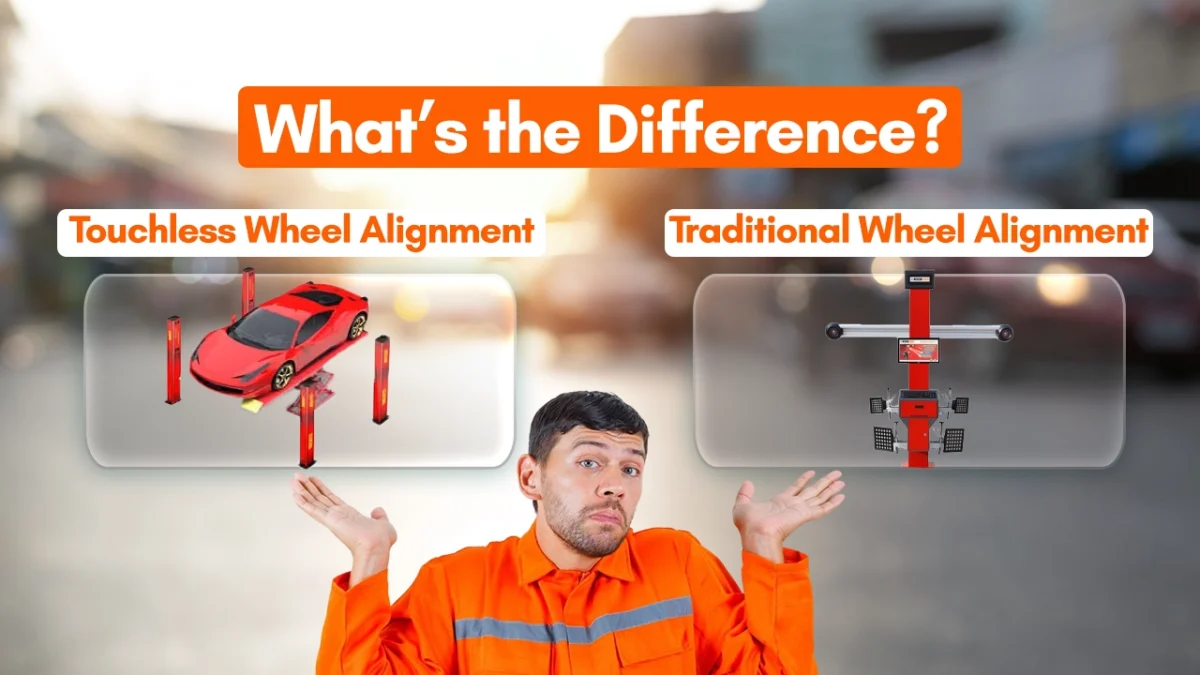
Wheel alignment equipment has changed a lot over the years, but many shops still use a mix of older and newer systems depending on their workflow and budget.
That’s why the comparison between touchless and traditional wheel alignment keeps coming up. Both systems are designed to measure alignment angles and help correct wheel positioning, but the way they do it is completely different.
And once you see both in action, the differences become pretty obvious.
What Is Traditional Wheel Alignment?
Traditional wheel alignment systems use physical equipment attached directly to the wheels.
Usually, that includes:
- Clamps
- Sensors
- Targets or heads mounted on the rims
The system then measures alignment angles like:
- Camber
- Toe
- Caster
after everything is manually attached and calibrated.
This setup has been common in workshops for years and is still widely used today.
What Is Touchless Wheel Alignment?
Touchless alignment works differently.
Instead of clamping equipment onto the wheels, the system uses:
- Cameras
- Optical sensors
- Imaging technology
to scan and measure wheel alignment without physically touching the rims.
The measurements are processed digitally, and alignment readings appear almost immediately.
The Biggest Difference: Contact vs No Contact
That’s really what separates the two systems.
Traditional alignment physically attaches equipment to the vehicle. Touchless alignment reads the wheel position without attaching anything directly to the rims.
It sounds like a small detail, but it changes the workflow quite a bit.
Setup Time Feels Very Different
This is usually the first thing technicians notice.
Traditional systems:
- Require clamps to be attached
- Need manual positioning
- Take longer before measurements begin
Touchless systems:
- Scan the wheels quickly
- Reduce manual setup
- Start measuring faster
In busy shops, those few saved minutes matter more than people expect.
Risk of Rim Damage
This is one area where touchless systems stand out.
Because traditional systems attach directly to the wheels, there’s always some risk of:
- Scratches
- Marks
- Pressure on expensive rims
Touchless systems avoid that completely since nothing physically touches the wheel surface.
Accuracy Differences
People often assume newer automatically means more accurate, but it’s not always that simple.
Both systems can provide accurate results when:
- Properly calibrated
- Used correctly
- Maintained properly
The main advantage of touchless systems is consistency and reduced setup variation.
Workflow and Shop Efficiency
Touchless systems are often preferred in:
- High-volume alignment shops
- Dealership service centers
- Modern tire facilities
Mostly because they help speed up workflow and reduce manual setup time.
Traditional systems still work very well, but they usually require more hands-on preparation.
Technician Experience Still Matters
This part doesn’t really change between systems.
Even with advanced touchless technology, the technician still needs to:
- Understand alignment angles
- Make proper adjustments
- Interpret measurements correctly
The equipment helps, but experience still matters.
Cost Differences
Traditional alignment systems are generally:
- Less expensive upfront
- More common in smaller shops
Touchless systems usually cost more because of:
- Advanced imaging technology
- Camera systems
- Digital scanning equipment
For some shops, the speed improvement justifies the higher investment.
Which One Makes More Sense?
It depends on the shop.
Traditional alignment may make sense if:
- The shop already has functioning equipment
- Alignment volume is lower
- Budget matters more than speed
Touchless alignment may make more sense if:
- The shop handles high daily volume
- Faster workflow matters
- Premium wheels are common
- Reducing setup time is important
Neither system is automatically “better” for every situation.
One Thing People Often Get Wrong
Some people assume touchless alignment means the technician barely does anything. That’s not really true.
The technology speeds up the measurement process, but proper wheel alignment still depends heavily on the person operating the equipment.
Final Thoughts
Touchless and traditional wheel alignment systems both serve the same purpose, but they approach the process very differently. Traditional systems rely on physical wheel-mounted equipment, while touchless systems use cameras and digital scanning technology to speed things up and reduce manual setup.
For many modern shops, touchless alignment improves workflow and consistency, especially in high-volume environments. But traditional systems still remain effective and widely used across the industry. And as alignment technology continues evolving, companies like Stan Design continue supporting workshops with equipment designed for modern automotive service environments.
Frequently Asked Questions (FAQs)
1. Is touchless wheel alignment replacing traditional systems completely?
Not really. A lot of shops still use traditional alignment equipment every day. Touchless systems are growing in popularity, but both setups are still common.
2. Does touchless alignment actually save time?
Yeah, mostly during setup. Since there’s no need to attach clamps or targets to the wheels, the process usually starts faster.
3. Are touchless systems more accurate?
They can be very accurate, but so can traditional systems. A lot depends on calibration, maintenance, and the technician using the equipment.
4. Why do some shops still prefer traditional alignment systems?
Usually because they already have working equipment and technicians are comfortable using it. Traditional systems are also generally less expensive upfront.
5. Is there less risk of wheel damage with touchless alignment?
Yes, that’s one of the biggest advantages. Since nothing clamps onto the rims, there’s less chance of scratches or marks on expensive wheels.
6. Do technicians still need training with touchless systems?
Definitely. The equipment may speed things up, but proper alignment still depends on knowing how to read measurements and make adjustments correctly.
7. Which system works better for busy shops?
A lot of high-volume shops prefer touchless systems because they help speed up workflow and reduce setup time throughout the day.
8. Is touchless alignment harder to maintain?
Not necessarily harder, but the camera systems and sensors still need regular calibration and maintenance to keep readings accurate.