
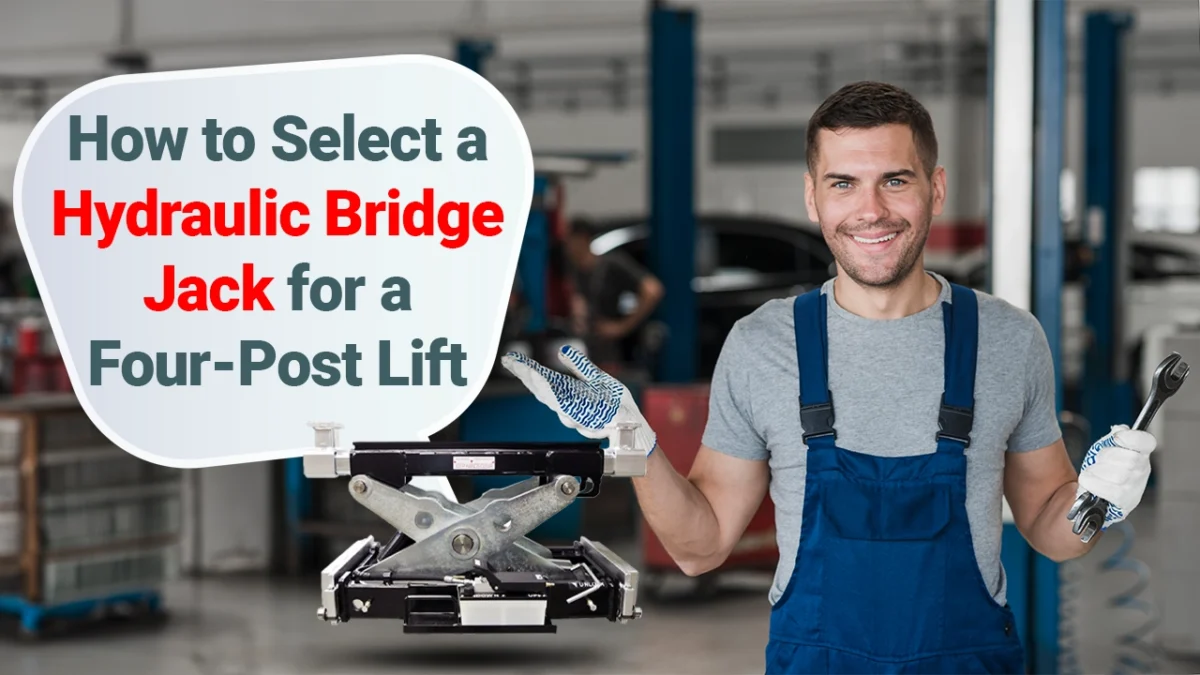
A four-post lift is one of the most useful pieces of equipment in a workshop, but adding the right hydraulic bridge jack can make it even more versatile. Without a bridge jack, the vehicle stays supported by its wheels. With one, technicians can lift the axle or frame and gain access to wheels, brakes, suspension components, and other areas that would otherwise be difficult to reach.
The challenge is that not all bridge jacks are the same. Choosing the right model depends on the vehicles being serviced, the lift being used, and the type of work performed every day.
If you’re considering adding a hydraulic bridge jack to a four-post lift, here are a few important things worth looking at before making a decision.
Start with the Vehicles You Service
The first thing to think about is the type of vehicles that come through your shop.
Some workshops mainly work on:
- Passenger cars
- SUVs
- Light trucks
Others regularly service:
- Fleet vehicles
- Commercial vans
- Heavy-duty trucks
The size and weight of those vehicles will help determine the kind of bridge jack you need. In shops that work on larger commercial vehicles, a truck jack may also be used alongside a bridge jack depending on the repair being performed.
A bridge jack that works perfectly for passenger vehicles may not be the best fit for heavier applications.
Check the Lifting Capacity
This is usually the first specification people pay attention to.
The bridge jack should comfortably handle the vehicles being serviced without spending its life operating near the upper limit of its rating.
Having some extra capacity can help with:
- Stability
- Reduced wear on components
- Longer service life
That doesn’t mean you need the biggest jack available. It just means the capacity should make sense for the workload.
Make Sure It Fits Your Four-Post Lift
This is something that’s easy to overlook.
Not every bridge jack fits every four-post lift, so it’s important to check:
- Runway width
- Rail dimensions
- Lift design
- Manufacturer recommendations
A bridge jack should move smoothly along the rails and fit correctly within the lift system.
It’s one of those details that’s much easier to sort out before installation than after.
Pay Attention to the Lifting Range
Capacity is important, but it’s only part of the picture.
The lifting range also needs to suit the vehicles you’re working on.
A bridge jack should provide enough travel to:
- Remove wheels comfortably
- Access brake components
- Perform suspension repairs
If the lifting range is too limited, certain jobs can become more difficult than they need to be.
Think About How the Shop Operates
Every workshop has a different routine.
Some bays only use a bridge jack occasionally, while others rely on one throughout the day.
If the equipment is being used regularly, things like:
- Ease of movement
- Smooth operation
- Lifting speed
start to matter a lot more than they might seem at first.
Equipment that works well on paper doesn’t always feel efficient during a busy shift.
Manual Hydraulic or Air Hydraulic?
Bridge jacks are available in different operating styles.
Manual Hydraulic Models
These are often chosen because they’re:
- Straightforward
- Cost-effective
- Suitable for lighter use
Air Hydraulic Models
These use compressed air to assist the hydraulic lifting process.
Many busy workshops prefer them because they:
- Require less effort
- Speed up lifting
- Help improve workflow
They’re especially common in facilities that already use air-powered equipment.
Don’t Ignore Build Quality
A bridge jack isn’t something that gets used once in a while and forgotten about.
In many workshops, it’s part of the daily routine.
That’s why things like:
- Frame strength
- Wheel construction
- Hydraulic components
- Overall stability
are worth paying attention to.
A well-built jack often ends up being the better investment over the long run.
Think About Future Requirements
A lot of shops buy equipment based only on what they’re servicing today.
But workloads can change.
Maybe the shop starts taking on larger vehicles, or maybe commercial work becomes a bigger part of the business. In those situations, equipment such as a truck jack may become part of the lifting setup as well.
Thinking ahead can sometimes save the cost of replacing equipment sooner than expected.
One Thing People Often Overlook
A lot of attention goes to lifting capacity, and that’s understandable.
But after using a bridge jack for a while, technicians often care just as much about:
- Stability
- Ease of positioning
- Smooth operation
- Reliability
Those are the things that affect everyday workflow.
Final Thoughts
Selecting a hydraulic bridge jack for a four-post lift involves more than simply choosing a lifting capacity. The best bridge jack for your shop will depend on a number of criteria such as the type of vehicles that you service, the type of lift that you have, your lifting range requirements, your working methods and the build quality of the product.
The best bridge jack is the one that fits into your workshop’s process and feels that it has delivered a good quality of lift on numerous occasions. For reliable lifting solutions used in actual workshop environments, bridge jack systems from Stan Design are good to use.
The best bridge jack is the one that matches the way the shop actually works. For workshops looking for dependable lifting solutions, manufacturers like Stan Design offer bridge jack systems designed to support efficient service and long-term reliability in real-world workshop environments.
Frequently Asked Questions (FAQs)
1. Will any bridge jack fit my four-post lift?
Not necessarily. It’s always a good idea to check the lift dimensions and rail setup before ordering a bridge jack.
2. How much lifting capacity do I actually need?
A good starting point is to look at the vehicles your shop works on most often and choose a capacity that comfortably covers them.
3. Are air hydraulic bridge jacks worth it?
If the jack is being used throughout the day, most technicians would say yes because they make lifting quicker and require less effort.
4. Why does lift height matter so much?
Because it’s hard to work on brakes, suspension, or wheels if the vehicle can’t be raised high enough.
5. Can the same bridge jack be used for trucks?
Some can, but it depends on the weight rating. For larger commercial vehicles, shops sometimes use a truck jack as part of the setup as well.
6. What’s the mistake people make most often when buying a bridge jack?
A lot of people look at the capacity first and forget to check whether it will actually fit their lift.
7. Do bridge jacks need much maintenance?
Not a huge amount, but regular checks help keep everything working smoothly and can catch small issues before they become bigger ones.
8. Should I buy a bridge jack with more capacity than I need today?
It can make sense if you think you’ll be working on larger vehicles in the future, but there’s usually no need to go excessively oversized.