
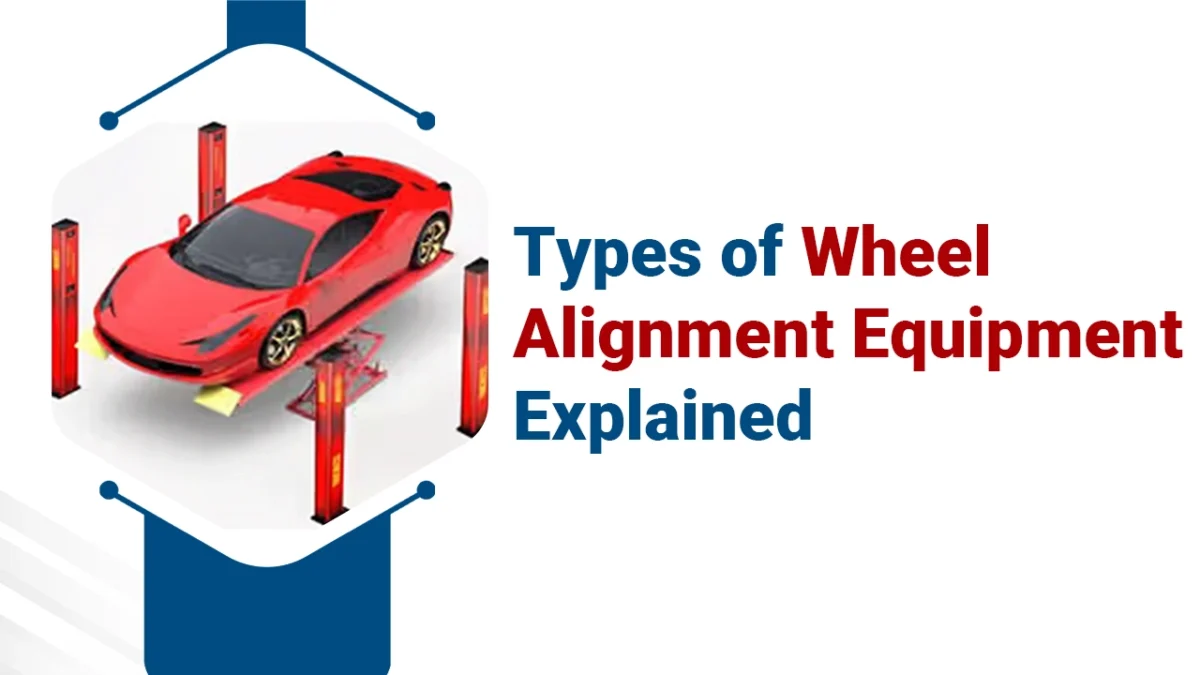
Wheel alignment equipment has come along way since the day of tedious and labor intensive adjustments. Nowadays there is technology that can instantly read and report on all angles of your car’s suspension in a matter of minutes.
There are many different wheel alignment machines available on the market today. As there are many different shops, each doing work in their own way, the type of wheel alignment machine a shop will use depends on the individual shop. In making a decision on a wheel alignment machine the following factors must be taken into account: price, type of work that is to be done with the machine, daily volume of vehicles serviced by the shop and the variety of services that are offered.
Knowing the different types of wheel alignment machines available can be very helpful when making a purchasing decision.
Why Wheel Alignment Equipment Matters
Proper wheel alignment helps ensure that a vehicle’s wheels are positioned according to manufacturer specifications.
When alignment is off, it can lead to:
- Uneven tire wear
- Poor handling
- Reduced fuel efficiency
- Steering issues
That’s why alignment equipment has become a standard part of many automotive repair facilities.
1. CCD Wheel Alignment Systems
CCD (Charge-Coupled Device) alignment systems have been used in workshops for many years.
These systems use:
- Sensors
- Measuring heads
- Electronic communication between wheels
The equipment measures wheel angles and sends the information to a computer for analysis.
Why some shops still use CCD systems:
- Proven technology
- Reliable measurements
- Lower cost than some advanced systems
While newer technology exists, CCD systems continue to be used in many workshops.
2. 3D Wheel Alignment Systems
3D alignment systems are among the most common choices in modern automotive shops.
Instead of relying solely on sensors, they use:
- Cameras
- Reflective targets
- Computerized imaging technology
The system creates a three-dimensional view of wheel positions and alignment angles.
Advantages of 3D systems:
- Fast measurements
- High accuracy
- Improved workflow
- Reduced setup time
For many repair facilities, 3D technology strikes a good balance between speed and performance.
3. Touchless Wheel Alignment Systems
Touchless wheel alignment is one of the newer developments in alignment technology.
Unlike traditional systems that require clamps or targets attached to the wheels, touchless systems use:
- Optical scanning
- Cameras
- Advanced imaging software
to measure wheel alignment without physically touching the rims.
Why shops are interested in touchless systems:
- Faster setup
- No wheel contact
- Reduced risk of rim damage
- Improved consistency
These systems are becoming increasingly popular in high-volume service environments.
4. Laser Wheel Alignment Equipment
Laser alignment systems were widely used before modern camera-based technology became common.
They use laser beams to measure wheel positioning and alignment angles.
Benefits include:
- Simple operation
- Reliable measurements
- Lower equipment costs
While many shops have moved toward 3D and touchless systems, laser alignment equipment is still found in some facilities.
5. Heavy-Duty Wheel Alignment Systems
Not every alignment machine is built for passenger vehicles.
Heavy-duty alignment equipment is specifically designed for:
- Trucks
- Buses
- Commercial vehicles
- Fleet maintenance facilities
These systems are built to accommodate larger wheelbases and heavier vehicle weights.
Commonly used in:
- Truck service centers
- Fleet workshops
- Commercial repair facilities
Which Type Is Best?
There’s no single answer because every shop operates differently.
CCD Systems May Make Sense If:
- Budget is a priority
- Existing equipment still performs well
- Alignment volume is moderate
3D Systems May Be a Good Choice If:
- Speed matters
- Workflow efficiency is important
- The shop performs alignments regularly
Touchless Systems May Be Best If:
- High vehicle volume is common
- Premium wheels are serviced frequently
- Faster setup times are a priority
Heavy-Duty Systems Are Necessary If:
- Commercial vehicles are part of the workload
- Larger wheelbases need to be accommodated
- One Thing People Often Focus on Too Much
It’s Not Just About Accuracy
Many buyers compare equipment based only on accuracy.
Accuracy matters, of course. But in everyday use, factors such as:
- Setup time
- Ease of operation
- Software usability
- Long-term support
can be just as important.
The best alignment machine is usually the one that fits the shop’s workflow.
Final Thoughts
There are a number of wheel alignment machines on offer and each has their own specialism. Some are more suited to certain types of garages than others, and will often depend on the types of vehicles that are commonly serviced in the garage, the normal working practices of the garage and the long term aims of the business.
Whether you decide to go with the traditional wheel alignment methods, or with the latest touchless technology, there are several things you will need to consider before purchasing any wheel alignment equipment for your repair shop. Choosing the correct wheel alignment equipment from a reputable supplier, such as Stan Design, is critical to delivering quality wheel alignments and increased shop productivity to your customers.
Frequently Asked Questions (FAQs)
1. What is the most common type of wheel alignment equipment used today?
Many modern workshops use 3D wheel alignment systems because they’re fast, accurate, and relatively easy to operate.
2. What’s the difference between 3D and touchless wheel alignment?
A 3D system uses targets attached to the wheels, while a touchless system measures alignment without physically touching the rims.
3. Are CCD alignment machines still used?
Yes, plenty of workshops still use CCD systems because they’re reliable and continue to provide accurate measurements.
4. Is touchless wheel alignment better than traditional alignment?
Not necessarily. It depends on the shop’s needs, budget, and the number of alignments performed each day.
5. Do truck alignment shops use the same equipment as car repair shops?
Usually not. Heavy-duty vehicles often require alignment systems designed specifically for larger wheelbases and vehicle weights.
6. Can older laser alignment systems still provide accurate results?
Yes, when properly maintained and calibrated, laser systems can still deliver dependable alignment measurements.
7. Which type of alignment equipment is best for a busy workshop?
Many high-volume shops prefer 3D or touchless systems because they help reduce setup time and improve workflow.
8. What should a shop consider before buying alignment equipment?
Things like vehicle type, daily alignment volume, available space, software usability, and long-term support are all worth considering.